If you’re over 50, an NHS bowel screening kit may already have landed on your doormat. If you’re younger, you may have seen headlines about bowel cancer rising in people under 50 – and wondered what that means for you.
Either way, it’s worth knowing how bowel cancer screening works, and where its limits lie. This guide explains the NHS FIT test, why its threshold matters, what new blood tests can and can’t do, and how Preologi brings the two together.
Key takeaways
- Bowel cancer is the fourth most common cancer in the UK, with around 48,000 new cases a year.
- The NHS offers a home FIT test every two years to adults aged 50–74.
- A lower FIT threshold finds more cancers and high-risk polyps – but sends more people for colonoscopy
- The Galleri® blood test looks for a different signal and may complement FIT. It does not detect precancerous polyps and should not replace FIT or colonoscopy.
Why bowel cancer screening matters more than ever
Bowel cancer – also known as colorectal cancer – is the fourth most common cancer in the UK, with approximately 48,000 new cases diagnosed each year (Cancer Research UK).
It mainly affects older adults, but there is growing concern about rising rates in younger people. In the UK, bowel cancer incidence among adults aged 25–49 has increased by more than 50% since the early 1990s.
The reasons are not fully understood. Researchers are investigating several possible factors:
- Changes in diet
- Obesity and metabolic health
- The gut microbiome
- Environmental exposures
Why bowel cancer is different
Bowel cancer often develops slowly from precancerous growths called adenomas. These can be detected and removed before they become malignant.
That makes bowel cancer unusual. Effective screening offers the chance not only to detect cancer early, but to prevent some cancers developing in the first place.
How does bowel cancer screening work today?
The NHS bowel cancer screening programme offers adults aged 50–74 a faecal immunochemical test (FIT) every two years.
What is a FIT test?
FIT is a simple stool test you do at home. It looks for microscopic amounts of blood that can’t be seen with the naked eye.
Bleeding may indicate a bowel cancer or a precancerous polyp. However, many other conditions can also cause blood to appear in stool, so a positive result is not a diagnosis.
What happens after a positive FIT result?
A positive FIT result generally leads to a colonoscopy. This allows doctors to examine the bowel directly and remove potentially dangerous polyps.
FIT is a well-established screening tool, but it does not detect every cancer or precancerous lesion.
Why the FIT threshold matters
FIT measures the amount of haemoglobin in stool, expressed as micrograms of haemoglobin per gram of faeces (µg Hb/g). The threshold used to define a positive result makes a substantial difference.
- A lower threshold identifies more cancers and high-risk polyps.
- The trade-off is that more people are referred for colonoscopy.
What the research shows
Modelling from English FIT screening research estimated how much each threshold detects in a single screening round:
table width=”620″ cellpadding=”2″ style=”border-collapse: collapse; border: 1pt solid #000;”>
| FIT threshold |
Bowel cancers detected |
High-risk adenomas detected |
| 20 µg/g |
Approx. 82% |
Approx. 64% |
| 120 µg/g |
Approx. 48% |
Approx. 23–25% |
Modelled estimates for individual screening rounds, rather than the overall effectiveness of repeated screening.
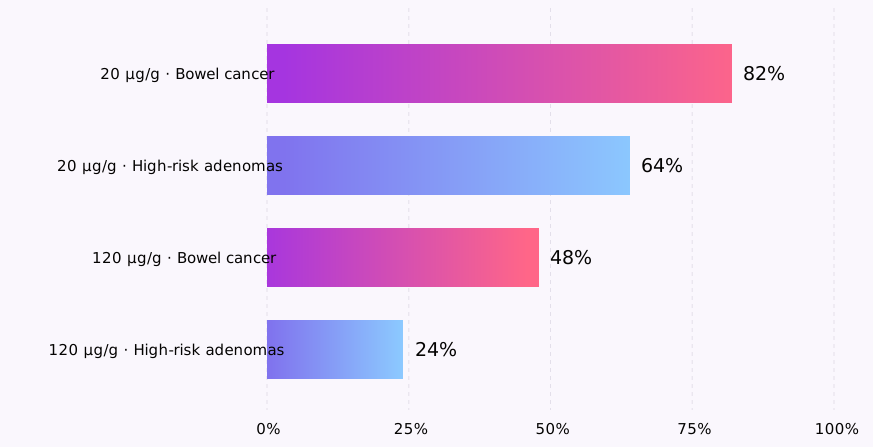
Figure 1. Modelled sensitivity estimates from English FIT screening research.
What’s changing in England
In 2026, NHS England began lowering its FIT threshold from 120 to 80 µg/g, aiming to identify more cancers and precancerous polyps.
A threshold of 20 µg/g offers the potential for even greater sensitivity. It comes with an important trade-off: more positive results and more colonoscopies.
Effective screening offers the chance not only to detect bowel cancer early, but to prevent some cancers developing in the first place.
Could a blood test add another layer of protection?
Scientists have developed blood tests that look for biological signals associated with cancer. One of these is the Galleri® test , a multi-cancer early detection (MCED) test.
Galleri® analyses patterns of DNA methylation in DNA fragments circulating in the blood. Methylation refers to chemical modifications associated with how genes are regulated.
How Galleri® differs from FIT
- It is designed to detect signals associated with more than 50 cancer types, including colorectal cancer.
- It does not rely on bleeding into the bowel.
- Because it looks for a different biological signal, it could complement FIT.
What Galleri® can’t do
Galleri® has not been validated for detecting precancerous bowel polyps. It should not replace FIT screening or colonoscopy.
What does the latest Galleri® research tell us?
Two major studies published in September 2026 – PATHFINDER 2 and NHS-Galleri – have provided important new evidence about how Galleri® performs in people without symptoms.
Of particular interest is its performance in 12 prespecified cancer types associated with substantial cancer mortality. These include colorectal, pancreatic, oesophageal, stomach, lung, liver and ovarian cancers. Many are difficult to detect early, and several have no established routine screening programme.
PATHFINDER 2: key findings
PATHFINDER 2 involved more than 32,000 participants.
- 8% sensitivity for the 12 high-mortality cancers – the single blood test detected around seven in ten of these cancers diagnosed during the assessment period.
- 64% specificity across all cancer types – false-positive results were uncommon.
- 3% positive predictive value (PPV) – around six in ten positive results were associated with a cancer diagnosis.
- Colorectal cancer: Galleri® detected five of eight cancers, an estimated sensitivity of 62.5%. The small number of cases means this estimate remains uncertain.
NHS-Galleri: key findings
In the NHS-Galleri trial, the primary endpoint – a statistically significant reduction in combined stage III and IV incidence among the 12 prespecified cancers – was not met.
Secondary findings suggested fewer stage IV diagnoses, but longer follow-up is needed to establish clinical benefit. You can read more on how the Galleri® test performs.
What does positive predictive value mean?
Positive predictive value (PPV) is one of the most important measures when evaluating a screening test. Put simply, it tells us how likely someone with a positive result is to actually have cancer.
For example, a PPV of 60% means around 60 out of every 100 people with a positive result will be found to have cancer after further investigation. The other 40 will not have a cancer confirmed.
PPV matters most when screening apparently healthy people, because cancer is relatively uncommon in this group. It also depends on factors such as age and underlying cancer risk. Read more about understanding your results.
How often should bowel cancer screening be done?
The NHS currently offers FIT every two years to adults aged 50–74. This reflects a balance between cancer detection, prevention, screening participation and colonoscopy capacity.
However, cancers can develop between screening rounds, and no single test identifies every cancer. More frequent FIT, particularly at a lower threshold, may help identify abnormalities earlier – although it also increases the likelihood of further investigations.
Galleri® has been evaluated using annual testing in major clinical studies, including NHS-Galleri. The optimal screening frequency, and the clinical benefit of combining annual FIT with Galleri®, are not yet established.
The Preologi approach: combining established and emerging tests
At Preologi, we believe that carefully combining established screening methods with newer technologies may offer additional opportunities for earlier cancer detection. Our approach brings together two annual tests:
| Annual FIT at 20 µg/g |
Annual Galleri® test |
| Looks for microscopic bleeding from cancers and polyps.
This lower threshold aims to improve detection of bowel cancers and high-risk precancerous polyps compared with higher thresholds. |
Looks for cancer-associated DNA signals across multiple organs.
An additional opportunity to identify signals from colorectal cancer and many other cancer types. |
Complementary approaches – not a validated combined screening protocol.
The potential advantage is that these tests examine different biological features of cancer. FIT detects microscopic bowel bleeding and can identify precancerous lesions. Galleri® analyses cancer-associated DNA signals across multiple organs.
What we don’t yet know
The combination is biologically promising, but its added benefit for bowel cancer detection has not yet been established in prospective comparative trials. A negative result from either test cannot exclude cancer.
Our approach is designed to complement, not replace, established screening programmes – with clinical oversight and clear pathways for investigating positive results. Find out more about follow-up care at Preologi.
The future of bowel cancer screening
Bowel cancer screening is evolving rapidly. More sensitive FIT thresholds, improved colonoscopy techniques and emerging blood-based tests all offer opportunities to improve how we identify disease.
The challenge is to balance earlier detection against unnecessary investigations, while keeping the vital ability to prevent bowel cancer by finding and removing precancerous polyps.
The takeaway
FIT remains the foundation of bowel cancer screening, and lowering its threshold helps it find more. Blood tests such as Galleri® look for a different signal and may add another layer – but they don’t replace FIT or colonoscopy.
At Preologi, our aim is to help people make informed decisions about cancer screening, combining scientific evidence, emerging technologies and personalised clinical care.
Important: screening tests are intended for people without symptoms. If you have rectal bleeding, a persistent change in bowel habit, unexplained weight loss or iron-deficiency anaemia, seek medical assessment – even if a recent screening test was negative.
Related reading
Frequently asked questions
What is a FIT test?
A faecal immunochemical test (FIT) is a home stool test that looks for microscopic amounts of blood. The NHS offers it every two years to adults aged 50–74. A positive result usually leads to a colonoscopy.
Can a blood test detect bowel cancer?
The Galleri® multi-cancer early detection test can detect signals associated with more than 50 cancer types, including colorectal cancer. In PATHFINDER 2 it detected five of eight colorectal cancers, though the small number of cases makes this estimate uncertain.
Does the Galleri® test replace bowel cancer screening?
No. Galleri® has not been validated for detecting precancerous bowel polyps and should not replace FIT screening or colonoscopy.
Why does the FIT threshold matter?
A lower threshold identifies more bowel cancers and high-risk polyps, but also means more people are referred for colonoscopy.
Sources
- English FIT screening pilot analyses, British Journal of Cancer (FIT threshold modelling). [Link to add]
- NHS England (January 2026). NHS to detect and prevent thousands more bowel cancers with more sensitive screening.
- Cancer Research UK. Bowel cancer statistics.
- PATHFINDER 2, Nature Medicine, September 2026 (12-cancer sensitivity and overall test performance). GRAIL summary: PATHFINDER 2 results.
- NHS-Galleri randomised trial, New England Journal of Medicine, September 2026. Queen Mary University of London summary: Major NHS trial provides new evidence on multi-cancer blood test.