Roger’s story: pancreatic cancer, caught in time

Roger felt healthy and low-risk. After reading about the test, he sought it out — and it caught a pancreatic cancer early, before symptoms. 

Roger considered himself healthy and never expected cancer. After reading about a blood test that screens for many cancers at once, he arranged one through an independent provider. The result flagged a signal, and further tests confirmed a pancreatic tumour — one of the hardest cancers to catch early. Found before any symptoms and at a treatable stage, Roger is now focused firmly on the years ahead with his family. 

“The Galleri test found this for me really in the nick of time.” — Roger

Source: GRAIL

Executive health screening: a more advanced approach to cancer and heart disease

Most executive health checks look much the same: blood tests, blood pressure, a cardiovascular risk score and some lifestyle advice.

These investigations are useful. But they tell us relatively little about whether an apparently healthy person already has significant coronary artery disease or an undiagnosed cancer. Here’s how Preologi approaches executive health screening differently – and how employers can extend it to their wider workforce.

KEY TAKEAWAYS

  • Standard executive checks estimate risk but can’t show what’s happening inside the coronary arteries, or detect many cancers.
  • CT coronary angiography (CTCA) with CaRi-Heart® analysis looks at plaque, narrowing and inflammation directly.
  • The Galleri® blood test looks for signals of more than 50 cancer types, many with no routine screening programme.

Programmes can be tailored to senior leaders or offered as a voluntary, confidential benefit for the wider workforce.

The limits of a standard executive health check

Executive health screening has been available for many years. Medical science has moved on considerably since then, and at Preologi we believe executive healthcare should reflect this.

Our approach is to make some of the most promising developments in early disease detection available through experienced clinicians and independent clinics across the UK. We are initially concentrating on two of the leading causes of premature death:

  • Cardiovascular disease
  • Cancer

Looking beyond conventional cardiovascular risk assessment

Traditional cardiovascular screening relies heavily on estimating risk from factors such as:

  • Cholesterol
  • Blood pressure
  • Diabetes
  • Smoking history

Although important, these measurements cannot tell us precisely what is happening within an individual’s coronary arteries.

Seeing the arteries directly with CTCA

CT coronary angiography (CTCA) allows us to examine the arteries directly, identifying atherosclerotic plaque and measuring the extent of coronary disease.

Adding CaRi-Heart® analysis

At Preologi, we combine CTCA with CaRi-Heart® analysis, which provides additional information about:

  • Total plaque burden
  • Plaque composition
  • The severity of coronary narrowing
  • Inflammation within the coronary arteries

The importance of these measurements has been highlighted by research including SCOT-HEART and ORFAN. We now understand that the amount and nature of coronary plaque, together with inflammation, is the most important indicator of future cardiovascular death.

This information can help clinicians make more informed decisions about preventative treatment, even in people who feel entirely well.

Extending the possibilities for early cancer detection

The limitations of conventional cancer screening are equally important. Established programmes for breast, bowel and cervical cancer have undoubtedly saved lives – but many serious cancers have no routine screening programme.

The Galleri® multi-cancer early detection test

The Galleri® blood test looks for cancer-associated DNA signals across more than 50 cancer types, including pancreatic, ovarian and oesophageal cancers. It is available to adults aged 50 and over.

Studies including PATHFINDER 2 and NHS-Galleri have advanced our understanding of this technology and its role in identifying cancer before symptoms develop.

Combining a Galleri® blood test with conventional cancer screening pathways increases detection of cancer by more than fourfold in asymptomatic individuals.

Working alongside established screening

At Preologi, Galleri® can be combined with established screening methods and additional investigations for bowel, prostate and lung cancer, where clinically appropriate. Read more about how blood tests and FIT can work together in bowel cancer screening.

Our intention is not to replace existing screening programmes, but to offer a more comprehensive approach to early detection.

What happens after screening matters just as much

At Preologi, we have placed considerable emphasis on the clinical pathway following testing:

  • Patients have a named care coordinator and access to senior clinical oversight.
  • If Galleri® identifies a possible cancer signal, we arrange appropriate further investigations and multidisciplinary review where required.
  • When significant coronary disease or inflammation is identified, the findings are reviewed and appropriate preventative treatment or specialist referral can be arranged.

Careful clinical management is an essential part of any responsible screening programme.

Corporate health screening for executives and the wider workforce

For directors and senior executives

We work with companies wishing to provide advanced health screening for directors, senior executives and other key employees. Programmes can be tailored to an individual’s age, medical history and risk factors, and arranged through our network of independent clinics.

For your wider workforce

We do not believe access to these developments should be limited to senior management. Companies can also offer Preologi screening as a wider employee benefit. This might involve:

  • The employer funding the programme
  • The employer contributing towards the cost
  • Simply arranging preferential access for employees who wish to pay for screening themselves

Tailored, voluntary and confidential

There is no requirement for every employee to undertake the same investigations. Screening can be tailored to clinical circumstances, with participation entirely voluntary and individual medical information remaining confidential.

Looking ahead

Preologi has been established to bring advances in medical science into everyday clinical practice, with appropriate clinical governance and senior scientific oversight.

We recognise that screening has limitations. No test will detect every cancer or prevent every heart attack, and new technologies must be evaluated carefully as further evidence becomes available.

The takeaway

We believe there is an opportunity to do considerably more than conventional health screening has traditionally offered. Our aim is to work with employers who share that ambition – helping their people access high-quality preventative healthcare and, where possible, identify serious disease at a stage when something can be done about it.

Related reading

Frequently asked questions

What does Preologi’s executive health screening include?

Programmes initially focus on cardiovascular disease and cancer. They can include CT coronary angiography with CaRi-Heart® analysis and the Galleri® multi-cancer early detection blood test, combined with established screening where clinically appropriate.

Can employers offer screening to all staff, not just executives?

Yes. Employers can fund the programme, contribute towards the cost, or arrange preferential access for employees who wish to pay for screening themselves.

Will my employer see my results?

No. Participation is entirely voluntary and individual medical information remains confidential.

Does this replace NHS screening?

No. Our intention is not to replace existing screening programmes, but to offer a more comprehensive approach to early detection.

Sources

  1. GRAIL (2026). PATHFINDER 2 results of more than 35,000 participants.
  2. Queen Mary University of London (2026). Major NHS trial provides new evidence on multi-cancer blood test.
  3. ORFAN study. The Lancet (2024). sciencedirect.com

Annual blood tests: what a comprehensive check covers – and why tracking results matters

Most of us only have a blood test when something feels wrong. Yet many medical conditions develop gradually, often without causing any symptoms in their early stages.

Regular blood testing can identify changes that might otherwise go unnoticed – and give you the chance to act before problems become established. Here’s what we include in a comprehensive annual blood test at Preologi, and why repeating it each year tells you more than a single result can.

KEY TAKEAWAYS

  • Many conditions develop silently, so a blood test can pick up changes before you notice anything.
  • A comprehensive annual test covers blood count and nutrition, heart health, blood sugar, organ function, minerals and thyroid.
  • Men can add PSA testing (and Stockholm3 if PSA is raised); women can add hormone testing, particularly around the menopause.
  • Comparing results year on year can reveal meaningful changes – even within the normal range.

Why have a blood test when you feel well?

Many medical conditions develop gradually. In their early stages, they often cause no symptoms at all.

Regular blood testing can identify changes in health that might otherwise go unnoticed. That provides an opportunity to intervene before problems become established.

What does a comprehensive annual blood test include?

At Preologi, we recommend a comprehensive annual blood test covering a number of important areas.

Area What we test What it helps show
Blood count and nutrition Full blood count, iron studies, vitamin B12, folate Anaemia and nutritional deficiencies
Heart and circulation Cholesterol, apolipoprotein B (ApoB), lipoprotein(a), high-sensitivity CRP Additional information about cardiovascular risk
Blood sugar HbA1c Longer-term blood glucose control and early diabetes
Organ function and minerals Liver, kidney and bone profiles (including calcium), magnesium Organ function and mineral balance
Thyroid Thyroid function How the thyroid is working

At a glance: the core areas covered by Preologi’s annual blood test.

Blood count and nutrition

A full blood count, iron studies, vitamin B12 and folate help identify anaemia and nutritional deficiencies.

Heart and circulation

A detailed cardiovascular profile includes cholesterol, apolipoprotein B (ApoB), lipoprotein(a) and high-sensitivity CRP. Together, these provide additional information about cardiovascular risk. If heart health is a priority for you, read about how silent heart disease develops.

Blood sugar

HbA1c assesses longer-term blood glucose control and can identify early diabetes.

Organ function and minerals

Liver, kidney and bone profiles assess organ function and mineral balance, including calcium levels. We also measure magnesium.

Thyroid

We include thyroid function as part of the core panel.

Additional tests for men and women

For men: PSA and Stockholm3

For men, the programme can also include PSA testing. If PSA is elevated, the more advanced Stockholm3 test can be added.

For women: hormone testing

For women, additional hormone testing may be useful, particularly when investigating symptoms associated with the menopause.

Why testing every year matters

One of the main benefits of annual testing is the ability to compare results over time.

Changes within the normal range can sometimes be informative.

A single result shows where you are today. A series of results shows which way things are moving – particularly when considered alongside your medical history and other investigations.

The takeaway

An annual blood test is a simple way to keep track of your health while you still feel well. By covering a broad range of markers – and comparing them year on year – it can highlight changes early, when there is more opportunity to act.

Related reading

Frequently asked questions

What does an annual blood test check?

Preologi’s comprehensive annual blood test covers full blood count, iron studies, vitamin B12 and folate; a cardiovascular profile including cholesterol, ApoB, lipoprotein(a) and high-sensitivity CRP; HbA1c; liver, kidney and bone profiles; magnesium; and thyroid function.

Why test every year rather than once?

Annual testing lets you compare results over time. Changes within the normal range can sometimes be informative, particularly alongside your medical history and other investigations.

Can men include a prostate test?

Yes. The programme can include PSA testing for men and, if PSA is elevated, the more advanced Stockholm3 test.

Further reading

  1. NHS – Blood tests
  2. Stockholm3 – about the test

Kevin’s story: a firefighter’s early catch

A firefighter of 30 years, Kevin felt healthy when his department offered the test. It flagged an early oesophageal cancer when Kevin had no symptoms

Kevin had been a firefighter for three decades and thought of himself as fit and low-risk. When his fire department offered the Galleri test, he took it — a simple blood draw. The result flagged a signal pointing to the oesophagus, a complete surprise when Kevin had no symptoms. Further tests confirmed an early-stage cancer, removed with minimally invasive surgery and a strong chance of long-term recovery. 

“By doing this test, I think I’m given more time.” — Kevin

Source: GRAIL

Silent heart disease: what REACT, SCOT-HEART and ORFAN reveal

Heart attacks often appear to strike without warning – sometimes in people who felt entirely well.

Yet the underlying disease, atherosclerosis, frequently develops silently over decades. Three major studies help explain why looking beyond symptoms and conventional risk scores may improve our understanding of heart attack risk. Here’s what each one found, and how Preologi applies those findings.

KEY TAKEAWAYS

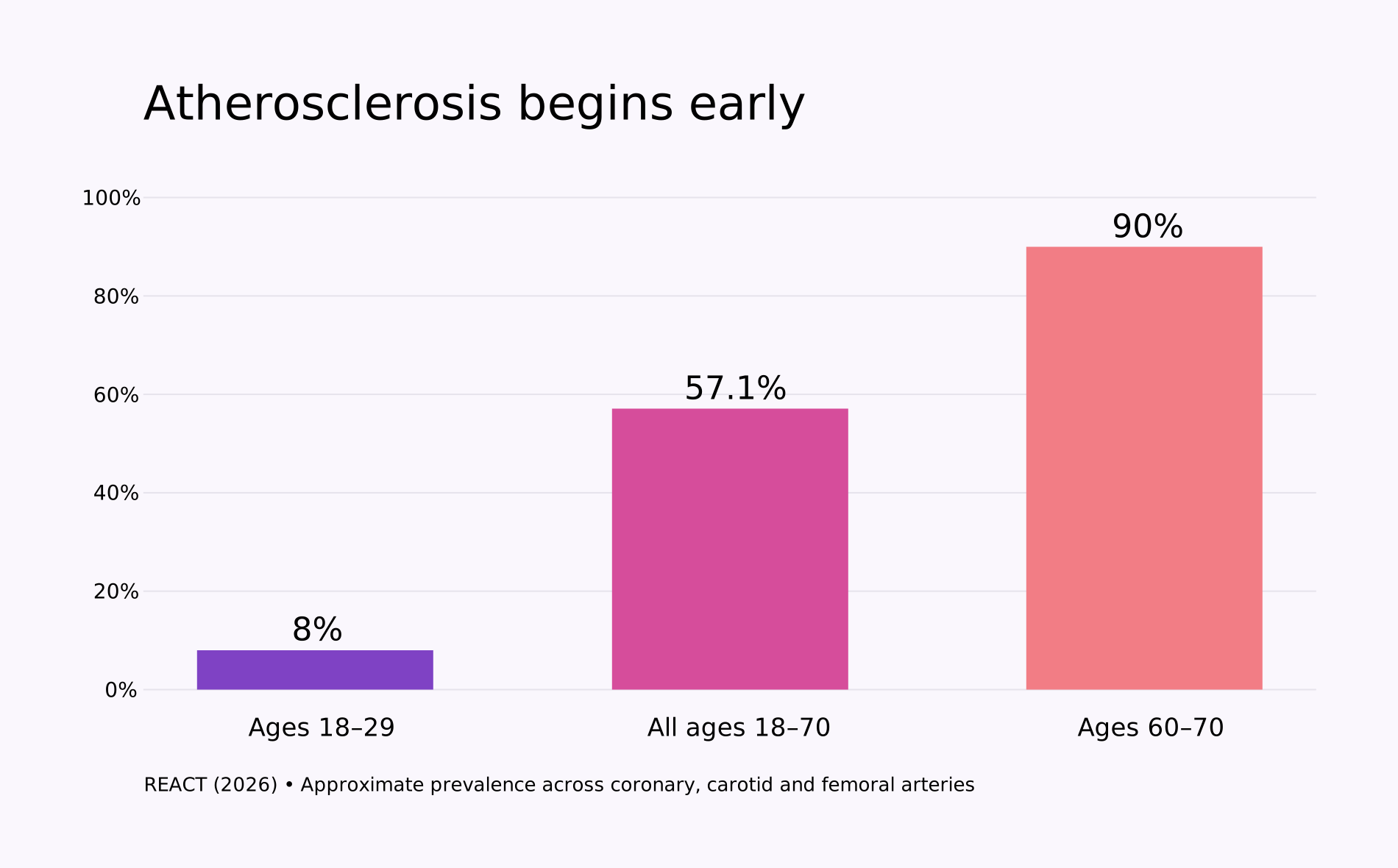
  • REACT found detectable atherosclerosis in around 57% of adults without diagnosed cardiovascular disease – rising to around 90% at ages 60–70.
  • SCOT-HEART showed that the amount and type of plaque predict future heart attacks, not just how narrow the arteries are.
  • ORFAN found most cardiac deaths occurred in people without obstructive coronary disease, and that coronary inflammation adds important information.
  • Preologi combines CTCA with Caristo Diagnostics analysis to assess narrowing, plaque burden, plaque composition and inflammation from a single scan.

What is atherosclerosis?

Atherosclerosis is the accumulation of fatty deposits, known as plaque, within the arteries. It is the disease that underlies most heart attacks.

It frequently develops silently, over decades, long before it causes symptoms.

REACT: atherosclerosis starts surprisingly early

The REACT study (2026) used coronary CT angiography (CTCA) and ultrasound of the carotid and femoral arteries to investigate atherosclerosis across adult life.

  • Around 16,800 adults without previously diagnosed atherosclerotic cardiovascular disease took part.
  • Around 57% had detectable disease.
  • Prevalence was approximately 8% at ages 18–29.
  • It rose to around 90% at ages 60–70.

These figures refer to atherosclerosis detected across the coronary, carotid and femoral arteries – not coronary disease alone. They illustrate how silently atherosclerosis can develop and accumulate with age.

Bar chart showing atherosclerosis prevalence of 8% at ages 18–29, 57.1% across ages 18–70 and 90% at ages 60–70.

Figure 1. Approximate prevalence of atherosclerosis across coronary, carotid and femoral arteries. Source: REACT (2026).

SCOT-HEART: the amount and type of plaque matter

The SCOT-HEART trial and its imaging analyses showed that coronary plaque burden and composition predict future myocardial infarction (heart attack).

In one analysis, patients with a low-attenuation plaque burden above 4% had approximately 4.7 times the subsequent risk of heart attack, compared with those below that threshold.

What this does – and doesn’t – mean

This does not mean that every fatty plaque will cause a heart attack. It means the extent and composition of atherosclerosis provide important information beyond the maximum degree of narrowing.

Around 81% of patients had no obstructive coronary disease – yet this group accounted for around 64% of cardiac deaths.

ORFAN: why coronary inflammation matters

The ORFAN study, published in The Lancet in 2024, followed more than 40,000 patients who underwent clinically indicated CTCA.

  • Approximately 81% had no obstructive coronary artery disease.
  • Yet this group accounted for around 64% of cardiac deaths during follow-up.

The study showed that CT-derived perivascular fat attenuation – a marker associated with coronary inflammation – adds prognostic information beyond conventional clinical risk factors and anatomical coronary disease.

Why inflammation matters

Inflammation contributes to plaque progression and instability. Importantly, a heart attack can occur without a previously severe coronary narrowing.

How Preologi applies these findings

Preologi combines CTCA with advanced Caristo Diagnostics analysis. This brings together four complementary assessments from the same coronary scan:

  1. Maximum coronary stenosis: automated quantification of the greatest degree of arterial narrowing, supporting identification of potentially important obstructions.
  2. Total coronary plaque burden: CaRi-Plaque quantifies the amount of atherosclerotic plaque, rather than focusing only on individual narrowings.
  3. Plaque composition: CaRi-Plaque measures calcified, non-calcified and low-density non-calcified plaque – including the higher-risk plaque characteristics investigated in SCOT-HEART.
  4. Coronary inflammation: CaRi-Heart® Fat Attenuation Index (FAI) analysis assesses changes in the fat surrounding the coronary arteries associated with inflammation and future cardiovascular risk.

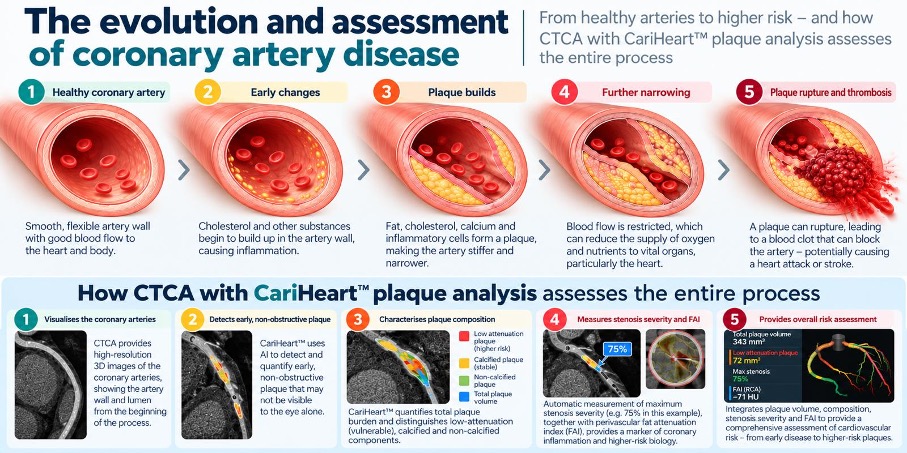
Together, these measurements help us assess how much coronary disease is present, what type of plaque has developed, how severely the arteries are narrowed and whether there is evidence of coronary inflammation.

Figure 2. The evolution and assessment of coronary artery disease – and how CTCA with plaque analysis assesses each stage.

Alt text: Infographic showing five stages of coronary artery disease from healthy artery to plaque rupture, alongside how CTCA with plaque analysis visualises arteries, detects plaque, characterises composition, measures stenosis and FAI, and provides an overall risk assessment.

Detect earlier. Understand more. Prevent better.

The purpose of early detection is to guide action. Identifying and grading coronary disease may help clinicians personalise:

  • Cholesterol-lowering treatment
  • Blood pressure management
  • Lifestyle interventions, according to individual cardiovascular risk

Going beyond a standard assessment

Many conventional assessments rely on risk-factor calculations, coronary calcium scoring or standard CTCA interpretation. Preologi’s integrated approach adds quantitative plaque characterisation and coronary inflammation assessment, within a clinician-led pathway.

The value lies not simply in more measurements, but in using them thoughtfully to inform prevention.

What the evidence doesn’t yet tell us

Further research is needed to establish whether routine advanced CTCA and FAI-based screening improves outcomes in people without symptoms.

SCOT-HEART and ORFAN primarily involved clinically referred patients. Their risk estimates should not be directly applied to healthy screening populations.

The takeaway

Heart disease often develops long before it causes symptoms. These three studies show that how much plaque is present, what type it is and whether the arteries are inflamed all matter – not just how narrow they are.

At Preologi, our ambition is to identify cardiovascular disease early, understand individual risk more accurately and intervene before a potentially devastating heart attack occurs.

Related reading

Frequently asked questions

What is silent heart disease?

It describes atherosclerosis – the build-up of fatty plaque in the arteries – that develops without symptoms. The REACT study found detectable atherosclerosis in around 57% of adults with no previously diagnosed cardiovascular disease.

What is CT coronary angiography (CTCA)?

CTCA is a scan that allows clinicians to examine the coronary arteries directly, identifying atherosclerotic plaque and measuring the extent of coronary disease.

Can you have a heart attack without narrowed arteries?

Yes. In the ORFAN study, around 81% of patients had no obstructive coronary artery disease, yet this group accounted for around 64% of cardiac deaths during follow-up.

What is the Fat Attenuation Index (FAI)?

FAI analysis assesses changes in the fat surrounding the coronary arteries that are associated with inflammation and future cardiovascular risk.

Scientific references

  1. REACT (2026). Prevalence of Silent Atherosclerosis across Adult Life. New England Journal of Medicine. nejm.org
  2. Williams MC et al. Low-Attenuation Noncalcified Plaque on Coronary Computed Tomography Angiography Predicts Myocardial Infarction. Circulation (2020). pmc.ncbi.nlm.nih.gov
  3. ORFAN study. Inflammatory risk and cardiovascular events in patients without obstructive coronary artery disease. The Lancet (2024). sciencedirect.com

Robert’s story: caught at stage one, back at work and enjoying life again

Robert joined the trial after losing both parents to cancer. After Galleri detected a cancer signal in two consecutive screening rounds, further investigations ultimately confirmed Stage I head and neck cancer — before he had symptoms. 

Robert signed up for the NHS-Galleri trial at 55 after losing both his parents to cancer. He felt fit and had no symptoms. His second Galleri test detected a cancer signal, although investigations did not confirm cancer. When his next test again detected a signal, further investigations confirmed Stage I head and neck cancer. Within months of treatment, he was back at work and enjoying his usual activities. 

“It was just a blood test – quick and easy.” — Robert

Source: GRAIL

Bowel cancer screening (UK): FIT tests, blood tests and what comes next

If you’re over 50, an NHS bowel screening kit may already have landed on your doormat. If you’re younger, you may have seen headlines about bowel cancer rising in people under 50 – and wondered what that means for you.

Either way, it’s worth knowing how bowel cancer screening works, and where its limits lie. This guide explains the NHS FIT test, why its threshold matters, what new blood tests can and can’t do, and how Preologi brings the two together.

Key takeaways

  • Bowel cancer is the fourth most common cancer in the UK, with around 48,000 new cases a year.
  • The NHS offers a home FIT test every two years to adults aged 50–74.
  • A lower FIT threshold finds more cancers and high-risk polyps – but sends more people for colonoscopy
  • The Galleri® blood test looks for a different signal and may complement FIT. It does not detect precancerous polyps and should not replace FIT or colonoscopy.

Why bowel cancer screening matters more than ever

Bowel cancer – also known as colorectal cancer – is the fourth most common cancer in the UK, with approximately 48,000 new cases diagnosed each year (Cancer Research UK).

It mainly affects older adults, but there is growing concern about rising rates in younger people. In the UK, bowel cancer incidence among adults aged 25–49 has increased by more than 50% since the early 1990s.

The reasons are not fully understood. Researchers are investigating several possible factors:

  • Changes in diet
  • Obesity and metabolic health
  • The gut microbiome
  • Environmental exposures

Why bowel cancer is different

Bowel cancer often develops slowly from precancerous growths called adenomas. These can be detected and removed before they become malignant.

That makes bowel cancer unusual. Effective screening offers the chance not only to detect cancer early, but to prevent some cancers developing in the first place.

How does bowel cancer screening work today?

The NHS bowel cancer screening programme offers adults aged 50–74 a faecal immunochemical test (FIT) every two years.

What is a FIT test?

FIT is a simple stool test you do at home. It looks for microscopic amounts of blood that can’t be seen with the naked eye.

Bleeding may indicate a bowel cancer or a precancerous polyp. However, many other conditions can also cause blood to appear in stool, so a positive result is not a diagnosis.

What happens after a positive FIT result?

A positive FIT result generally leads to a colonoscopy. This allows doctors to examine the bowel directly and remove potentially dangerous polyps.

FIT is a well-established screening tool, but it does not detect every cancer or precancerous lesion.

Why the FIT threshold matters

FIT measures the amount of haemoglobin in stool, expressed as micrograms of haemoglobin per gram of faeces (µg Hb/g). The threshold used to define a positive result makes a substantial difference.

  • A lower threshold identifies more cancers and high-risk polyps.
  • The trade-off is that more people are referred for colonoscopy.

What the research shows

Modelling from English FIT screening research estimated how much each threshold detects in a single screening round:
table width=”620″ cellpadding=”2″ style=”border-collapse: collapse; border: 1pt solid #000;”>

FIT threshold Bowel cancers detected High-risk adenomas detected 20 µg/g Approx. 82% Approx. 64% 120 µg/g Approx. 48% Approx. 23–25%

Modelled estimates for individual screening rounds, rather than the overall effectiveness of repeated screening.
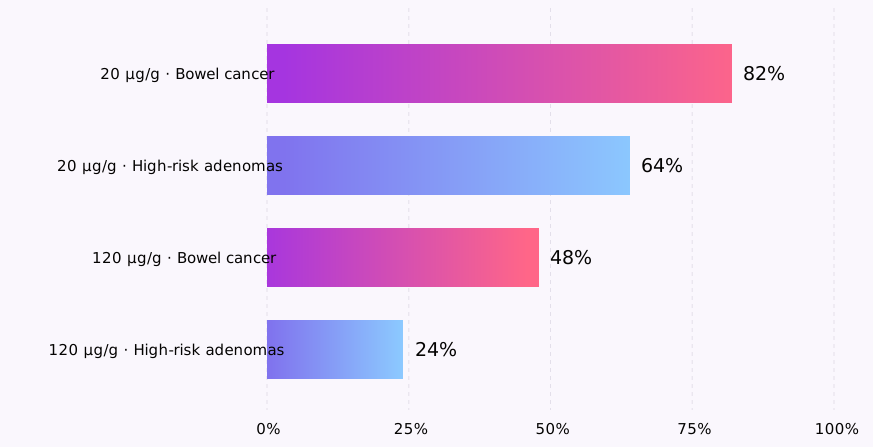
Figure 1. Modelled sensitivity estimates from English FIT screening research.

What’s changing in England

In 2026, NHS England began lowering its FIT threshold from 120 to 80 µg/g, aiming to identify more cancers and precancerous polyps.

A threshold of 20 µg/g offers the potential for even greater sensitivity. It comes with an important trade-off: more positive results and more colonoscopies.

Effective screening offers the chance not only to detect bowel cancer early, but to prevent some cancers developing in the first place.

Could a blood test add another layer of protection?

Scientists have developed blood tests that look for biological signals associated with cancer. One of these is the Galleri® test , a multi-cancer early detection (MCED) test.

Galleri® analyses patterns of DNA methylation in DNA fragments circulating in the blood. Methylation refers to chemical modifications associated with how genes are regulated.

How Galleri® differs from FIT

  • It is designed to detect signals associated with more than 50 cancer types, including colorectal cancer.
  • It does not rely on bleeding into the bowel.
  • Because it looks for a different biological signal, it could complement FIT.

What Galleri® can’t do

Galleri® has not been validated for detecting precancerous bowel polyps. It should not replace FIT screening or colonoscopy.

What does the latest Galleri® research tell us?

Two major studies published in September 2026 – PATHFINDER 2 and NHS-Galleri – have provided important new evidence about how Galleri® performs in people without symptoms.

Of particular interest is its performance in 12 prespecified cancer types associated with substantial cancer mortality. These include colorectal, pancreatic, oesophageal, stomach, lung, liver and ovarian cancers. Many are difficult to detect early, and several have no established routine screening programme.

PATHFINDER 2: key findings

PATHFINDER 2 involved more than 32,000 participants.

  • 8% sensitivity for the 12 high-mortality cancers – the single blood test detected around seven in ten of these cancers diagnosed during the assessment period.
  • 64% specificity across all cancer types – false-positive results were uncommon.
  • 3% positive predictive value (PPV) – around six in ten positive results were associated with a cancer diagnosis.
  • Colorectal cancer: Galleri® detected five of eight cancers, an estimated sensitivity of 62.5%. The small number of cases means this estimate remains uncertain.

NHS-Galleri: key findings

In the NHS-Galleri trial, the primary endpoint – a statistically significant reduction in combined stage III and IV incidence among the 12 prespecified cancers – was not met.

Secondary findings suggested fewer stage IV diagnoses, but longer follow-up is needed to establish clinical benefit. You can read more on how the Galleri® test performs.

What does positive predictive value mean?

Positive predictive value (PPV) is one of the most important measures when evaluating a screening test. Put simply, it tells us how likely someone with a positive result is to actually have cancer.

For example, a PPV of 60% means around 60 out of every 100 people with a positive result will be found to have cancer after further investigation. The other 40 will not have a cancer confirmed.

PPV matters most when screening apparently healthy people, because cancer is relatively uncommon in this group. It also depends on factors such as age and underlying cancer risk. Read more about understanding your results.

How often should bowel cancer screening be done?

The NHS currently offers FIT every two years to adults aged 50–74. This reflects a balance between cancer detection, prevention, screening participation and colonoscopy capacity.

However, cancers can develop between screening rounds, and no single test identifies every cancer. More frequent FIT, particularly at a lower threshold, may help identify abnormalities earlier – although it also increases the likelihood of further investigations.

Galleri® has been evaluated using annual testing in major clinical studies, including NHS-Galleri. The optimal screening frequency, and the clinical benefit of combining annual FIT with Galleri®, are not yet established.

The Preologi approach: combining established and emerging tests

At Preologi, we believe that carefully combining established screening methods with newer technologies may offer additional opportunities for earlier cancer detection. Our approach brings together two annual tests:

Annual FIT at 20 µg/g Annual Galleri® test
Looks for microscopic bleeding from cancers and polyps.

This lower threshold aims to improve detection of bowel cancers and high-risk precancerous polyps compared with higher thresholds.

Looks for cancer-associated DNA signals across multiple organs.

An additional opportunity to identify signals from colorectal cancer and many other cancer types.

Complementary approaches – not a validated combined screening protocol.

The potential advantage is that these tests examine different biological features of cancer. FIT detects microscopic bowel bleeding and can identify precancerous lesions. Galleri® analyses cancer-associated DNA signals across multiple organs.

What we don’t yet know

The combination is biologically promising, but its added benefit for bowel cancer detection has not yet been established in prospective comparative trials. A negative result from either test cannot exclude cancer.

Our approach is designed to complement, not replace, established screening programmes – with clinical oversight and clear pathways for investigating positive results. Find out more about follow-up care at Preologi.

The future of bowel cancer screening

Bowel cancer screening is evolving rapidly. More sensitive FIT thresholds, improved colonoscopy techniques and emerging blood-based tests all offer opportunities to improve how we identify disease.

The challenge is to balance earlier detection against unnecessary investigations, while keeping the vital ability to prevent bowel cancer by finding and removing precancerous polyps.

The takeaway

FIT remains the foundation of bowel cancer screening, and lowering its threshold helps it find more. Blood tests such as Galleri® look for a different signal and may add another layer – but they don’t replace FIT or colonoscopy.

At Preologi, our aim is to help people make informed decisions about cancer screening, combining scientific evidence, emerging technologies and personalised clinical care.

Important: screening tests are intended for people without symptoms. If you have rectal bleeding, a persistent change in bowel habit, unexplained weight loss or iron-deficiency anaemia, seek medical assessment – even if a recent screening test was negative.

Related reading

Frequently asked questions

What is a FIT test?

A faecal immunochemical test (FIT) is a home stool test that looks for microscopic amounts of blood. The NHS offers it every two years to adults aged 50–74. A positive result usually leads to a colonoscopy.

Can a blood test detect bowel cancer?

The Galleri® multi-cancer early detection test can detect signals associated with more than 50 cancer types, including colorectal cancer. In PATHFINDER 2 it detected five of eight colorectal cancers, though the small number of cases makes this estimate uncertain.

Does the Galleri® test replace bowel cancer screening?

No. Galleri® has not been validated for detecting precancerous bowel polyps and should not replace FIT screening or colonoscopy.

Why does the FIT threshold matter?

A lower threshold identifies more bowel cancers and high-risk polyps, but also means more people are referred for colonoscopy.

Sources

  1. English FIT screening pilot analyses, British Journal of Cancer (FIT threshold modelling). [Link to add]
  2. NHS England (January 2026). NHS to detect and prevent thousands more bowel cancers with more sensitive screening.
  3. Cancer Research UK. Bowel cancer statistics.
  4. PATHFINDER 2, Nature Medicine, September 2026 (12-cancer sensitivity and overall test performance). GRAIL summary: PATHFINDER 2 results.
  5. NHS-Galleri randomised trial, New England Journal of Medicine, September 2026. Queen Mary University of London summary: Major NHS trial provides new evidence on multi-cancer blood test.

Ann’s story: cancer detected before any symptoms

In her seventies and feeling well, Ann joined the NHS-Galleri trial to help others — and it flagged a bowel cancer she never knew was there. 

Ann had always kept up with her health checks, and a routine NHS bowel screening test had recently come back normal. She felt well and had no symptoms when she joined the NHS-Galleri trial in 2022 — mainly to help the research study. Her Galleri test detected a cancer signal. Further investigations confirmed Stage III bowel cancer. Today, her follow-up scans and blood tests are clear.

“Without the trial, I dread to think what would have happened. I’d have carried on with life until I felt unwell and gone to the doctor’s.” — Ann

Source: GRAIL

Why I founded Preologi: a cardiologist’s case for detecting serious disease earlier

I am 54 years old and have spent all of my professional life working as a doctor, both in the NHS and in independent medical practice. Over those years, I have become increasingly convinced that the way we practise medicine is failing to keep pace with what is now possible.

We can now identify serious disease earlier than ever before. Yet much of our healthcare system remains built around waiting for people to become ill. This is why I founded Preologi – and what I hope it can change.

Medicine has moved on

We have witnessed extraordinary advances in medical science and technology. Today, we can:

  • Identify coronary artery disease long before someone develops chest pain
  • Assess the extent and nature of atherosclerosis
  • Measure inflammation within the coronary arteries
  • Identify signals of cancer in the blood, frequently before symptoms have developed

Yet much of our healthcare system remains built around waiting for people to become ill.

Why established practice deserves questioning

There are understandable reasons for this. Healthcare resources are finite, established screening programmes require robust evidence, and new technologies must be evaluated carefully.

But I believe we have also become too comfortable with established practice. Cost, institutional caution and traditional ideas about what should and should not be screened for can become barriers to innovation – even when promising diagnostic technologies and effective treatments are available.

We rightly demand evidence before introducing new approaches. But we should be equally willing to question the consequences of continuing with established practice when the science has moved on.

Clinical judgement, not blanket rules

The absence of a national screening programme does not necessarily mean that an individual patient cannot benefit from a carefully selected investigation. Equally, the availability of a new test does not automatically justify its use.

What is needed is thoughtful clinical judgement, honest discussion of the evidence and a willingness to challenge assumptions.

Why this became personal

For me, this is no longer simply a professional frustration. It has become deeply personal. Over recent years, I have lost people very close to me, far too young.

Two close colleagues and friends died from bowel cancer. My stepfather died from prostate cancer in his fifties. A dear friend developed sarcoma and died just months after retiring.

Two other very close friends died prematurely – one following a sudden cardiac arrest, the other from ovarian cancer – leaving young families facing unimaginable loss.

I suspect almost anyone in middle age can look around their own circle of friends, family and colleagues and recognise similar stories. People who should still be with us. People who had plans, families, careers and years of life ahead of them.

As a doctor, I know that not every illness can be prevented, not every cancer can be detected early, and even the best medical care cannot guarantee a different outcome. But I cannot help asking how many of these lives might have been saved if we had looked earlier, investigated differently or made better use of the technology available to us.

We should not simply accept premature death and serious illness as inevitable when there may be opportunities to intervene earlier. That conviction is why I founded Preologi.

What Preologi sets out to do

My ambition is to make the best emerging medical science available to people through a network of clinics across the UK, supported by experienced clinicians who understand both the potential and the limitations of these technologies.

We are starting with cancer and cardiovascular disease – two of the greatest causes of premature death and suffering. In both fields, diagnostic technology has advanced enormously, and there are now opportunities to identify serious disease at a stage when treatment may be more effective.

We should not simply accept premature death and serious illness as inevitable when there may be opportunities to intervene earlier.

A screening test is only the beginning

Our approach brings together three things:

  • Excellent science
  • Careful clinical practice
  • Proper ongoing patient support

What matters equally is how results are interpreted, how patients are supported, and what happens next.

Being honest about the limitations

I have no illusions that these technologies will detect every cancer or prevent every heart attack. They will not. There will be false positives, false negatives and occasions when disease develops despite reassuring investigations.

These are important limitations that must be explained honestly. But I believe that, used intelligently and responsibly, these technologies offer an opportunity to make a meaningful difference to the burden of premature illness and death.

I do not believe we should have to wait another generation before exploring how the best of today’s medical technology can improve preventative healthcare. We need to be ambitious – but we must also be rigorous about demonstrating real clinical benefit and avoiding unnecessary harm.

Looking ahead

Preologi will not stand still. Medical science is moving rapidly, and we intend to keep evaluating new technologies as evidence develops.

Every addition to our programme will be considered through robust clinical governance and senior scientific oversight, with patient welfare at the centre of our decisions.

We want to work with excellent clinicians and clinics throughout the country, making these advances accessible while maintaining the highest standards of care. If you’re a clinician or clinic, find out about partnering with Preologi.

Why it matters

Ultimately, my ambition for Preologi is straightforward: to bring the best of modern medical science into everyday clinical practice, with the express aim of preventing unnecessary suffering and premature death.

If we can help more people remain healthy, enjoy their retirement, see their children grow up and spend more years with the people they love, then establishing Preologi will have been worthwhile.

Related reading

PATHFINDER 2 spots dozens of cancers before symptoms

US coverage of early PATHFINDER 2 results: when the test flagged a signal, cancer was found most of the time, with very few false alarms. 

Fox News reported on early results from PATHFINDER 2, a large US study of the Galleri test in around 23,000 people. It highlighted that when the test flagged a cancer signal, a cancer was confirmed in the majority of cases, while false alarms were rare. Coverage like this shows multi-cancer blood testing entering mainstream health conversations. 

Source: Fox News

UK’s NHS-Galleri test trial reports first results

University College London’s announcement of the NHS-Galleri results — candid that the main goal wasn’t met, alongside a fall in late-stage diagnoses.

This official University College London release announced the first results of the NHS-Galleri trial. It was candid that the study’s main goal was not met, while noting a meaningful reduction in the most advanced, stage IV diagnoses that grew stronger over three rounds of screening. It’s a useful, authoritative source to cite alongside the research write-up. 

Source: University College London